 comparison
Best Business Consulting Firms for Construction Cash Flow
Table of Contents
- How We Evaluated the Best Business Consulting Firms for Construction Cash Flow
- Construction Cash Flow Forecasting: What Top Firms Actually Deliver
- Construction Cash Flow Management: Strategies That Reduce Payment Delays and Retainage Gaps
- How to Improve Cash Flow in a Construction Business: Firm-by-Firm Comparison
- Fractional CFO for Construction Contractors: When It Fits and When It Does Not
- Transparent Pricing and What to Expect from Consulting Engagements
- Conclusion: Choosing the Right Consulting Firm for Your Construction Business
- Frequently Asked Questions
Last Updated: October 12, 2026
How We Evaluated the Best Business Consulting Firms for Construction Cash Flow
The best business consulting firms for construction contractors combine construction-specific financial expertise, transparent pricing, and hands-on implementation support. Construction cash flow is the movement of money into and out of a contracting business, measured against the timing of project costs, progress billings, retainage, and collections.
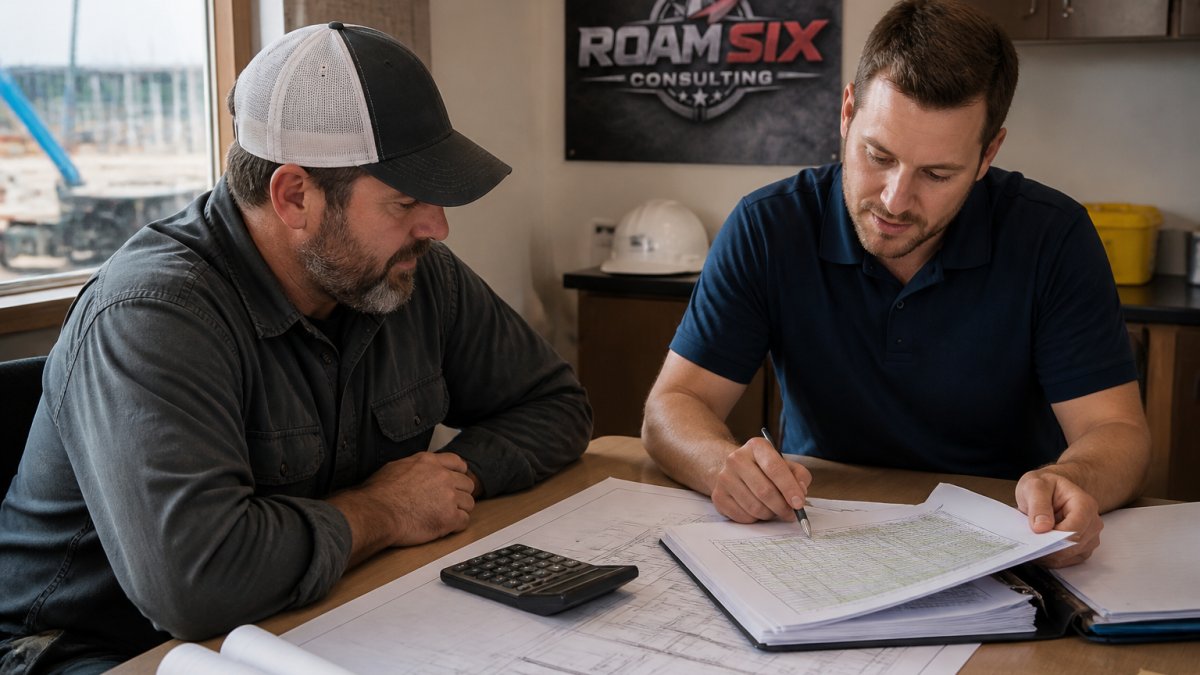
Most guides rank firms by brand recognition. That misses the point. A contractor waiting 60 days on a commercial invoice needs a firm that understands retainage, work-in-progress schedules, and weekly payroll pressure, not a generalist strategy deck.
Selection Criteria: Construction Expertise, Pricing Transparency, and Implementation Support
We scored every firm on three things: documented construction experience, whether pricing is disclosed or quoted, and whether the engagement includes implementation help rather than a report. Firms naming construction services directly scored higher than those publishing only thought leadership.
| Criterion | What We Looked For | Why It Matters |
|---|---|---|
| Construction expertise | Named construction services or resources | Generic advice ignores retainage and billing cycles |
| Pricing transparency | Published rates or clear quote process | Bootstrapped contractors need budget certainty |
| Implementation support | Hands-on help, not reports only | Recommendations without execution stall |
| Funding and lending access | Help securing capital | Rejected bank applications are common |
Construction Cash Flow Forecasting: What Top Firms Actually Deliver
Construction cash flow forecasting projects when cash will arrive and leave across active jobs, using billing schedules, retainage holds, and vendor terms. Strong firms build a rolling forecast tied to each project's progress, not a single annual budget.
A common mistake is forecasting revenue instead of cash. Revenue recognition and cash receipt are different events, and the gap between them is where contractors get squeezed.
Construction Cash Flow Management: Strategies That Reduce Payment Delays and Retainage Gaps
Effective construction cash flow management comes down to four levers: faster billing, tighter collections, negotiated payment terms, and cash reserves for slow months. Firms that improve performance focus on the cash conversion cycle, not top-line revenue.
Progress Billing, Billing Schedules, and Upfront Payments
Progress billing invoices a client at defined project milestones instead of at completion, shortening the gap between work performed and payment received. A billing schedule maps those milestones in advance so invoicing isn't left to memory.
Upfront payments and deposits shift part of the funding burden to the client before mobilization. Retainage, typically a percentage withheld until project close, ties up working capital for months.
How to Improve Cash Flow in a Construction Business: Firm-by-Firm Comparison
The fastest way to improve cash flow in a construction business is to pair better billing discipline with a firm that implements changes alongside your team. This section compares providers directly: what each firm does, who it fits, and how to score it against your situation.
| Firm | Model | Construction Focus | Typical Engagement Shape | Best For |
|---|---|---|---|---|
| Roam Six | Full-service consulting | Small business, service, commercial construction | Scoped engagement with implementation, funding, and operations support | Contractors roughly $1M-$20M who need strategy plus execution |
| Doeren Mayhew | CPA and advisory | Construction cash-flow guidance, assurance | Recurring advisory tied to attest work | Contractors who want financial statements and cash-flow guidance from one relationship |
| LSL CPAs | Accounting and consulting | Construction-services specialization | Accounting engagement with advisory add-ons | Industry-focused accounting support |
| CFO Advisors | Fractional CFO | Progress billing, retainage, WIP | Monthly fractional CFO retainer | Contractors needing ongoing financial leadership |
| Anders | CPA advisory | Billing aligned to project management | Advisory project or recurring | Contractors whose invoicing process is the weak link |
Roam Six: Custom Implementation and Funding Support
Roam Six is a veteran-owned consulting firm built for small businesses, service industries, and commercial construction contractors. What separates us from a report-and-retreat engagement is the implementation work: we help contractors tighten financial controls, improve billing accuracy, and build cash reserves that absorb slow payment cycles.
We're also direct about the funding gap. Contractors rejected by banks for insufficient collateral often need a different path to working capital, and securing that funding is part of what we do. Weighing a generalist firm against a construction-only shop?
CPA-Led Firms: Doeren Mayhew, LSL CPAs, and Anders
CPA-led firms bring audit-grade rigor to construction accounting. Doeren Mayhew publishes cash-flow strategies specifically for construction companies and provides both assurance and advisory services, suiting contractors who want financial statements and cash-flow guidance from one relationship.
LSL CPAs specializes in construction-services companies and frames its work around industry-specific accounting challenges.
The limitation across all four: pricing is quoted rather than published, so budget conversations happen late. If cost certainty matters, ask for a scoped quote before the first meeting.
Fit by Trade and Company Size
Construction is not one market. A specialty trade and a general contractor have different cash-flow pressure points, and the right firm depends on which one you are.
- Specialty trades (electrical, mechanical, roofing, concrete): Cash flow is dominated by mobilization costs, material deposits, and retainage on a few jobs. A firm that understands progress billing on short-duration projects and can negotiate deposits up front tends to outperform a generalist.
- General contractors: Cash flow is dominated by subcontractor pay schedules, owner billing cycles, and the gap between paying subs and getting paid by the owner. Look for a firm that has worked with pay-when-paid and pay-if-paid clauses and can model the float.
- Under $5M in revenue: The bottleneck is usually process, not strategy: billing goes out late, collections have no owner, and the books are behind. A hands-on consulting or bookkeeping-plus-advisory engagement usually beats a fractional CFO here.
How to Score a Firm Before You Hire
Use the same scorecard for every firm you interview. Score each item 1-5 and require evidence, not assurances.
- Construction experience: Can they name specific construction clients, trades, or project types? Ask for two references in your trade.
- Software familiarity: Do they know your accounting and project-management stack (for example, Sage 100 Contractor, Foundation, Viewpoint, QuickBooks, Procore, or Buildertrend)? A firm that has never touched your system will bill you to learn it.
- Implementation support: Does the proposal include someone doing the work with your team, or only recommendations?
What Proof of Results Should Look Like
Ask every firm for a before-and-after example with defined metrics. A credible case study names the starting DSO, the ending DSO, the time frame, and what changed operationally, for example, moving from invoice-date billing to progress billing tied to project milestones, or assigning a single owner to collections. Vague claims like "improved cash flow" without a number and time frame are marketing, not evidence.
Fractional CFO for Construction Contractors: When It Fits and When It Does Not
A fractional CFO for construction contractors fits when you need financial leadership, forecasting, and lender-ready reporting but can't justify a full-time executive salary. It does not fit when your core problem is operational: crews double-entering data, invoices going out late, or no one owning collections.
Here's the distinction that matters. A fractional CFO improves how you read and steer the numbers. A full-service consulting engagement improves how the numbers get produced in the first place.
Transparent Pricing and What to Expect from Consulting Engagements
Most firms in this space quote rather than publish, which makes comparison hard. This section lays out the fee models, the cost drivers behind quotes, and the questions that separate a scoped proposal from an open-ended one.
The Three Fee Models
Consulting pricing for construction cash flow work typically follows one of three models:
- Hourly: Common for CPA-led advisory and one-off projects. Rates vary widely by firm size and market, and the total is unknown until the work is done. Best when scope is genuinely unclear.
- Monthly retainer: Standard for fractional CFO arrangements. You pay a fixed monthly fee for a set number of hours or defined deliverables. Predictable, but watch for scope creep and hours that roll over or expire.
- Project-based flat fee: Common for defined engagements such as installing a forecasting model, cleaning up a WIP schedule, or rebuilding a billing process. Best for budget certainty, provided deliverables are written down.
Some firms blend models, a flat fee for the initial diagnostic, then a monthly retainer for ongoing work. That's reasonable if the diagnostic has a fixed price and a defined end date.
What Drives the Cost
The quote is a function of scope, not firm prestige. Main cost drivers:
- Number of entities and jobs in scope. More projects, job cost codes, and legal entities increase setup and reporting work.
- Condition of your books. Clean, current books take less time than a backlog, unreconciled accounts, or a job cost system that doesn't tie to the general ledger.
- Software and data integration. Connecting accounting, project management, and forecasting systems takes longer when they don't talk to each other or data lives in spreadsheets.
Because rates vary by firm size, market, and scope, published price lists are rare. The practical move is to force the quote into a comparable format.
What a Usable Proposal Contains
A comparable proposal should include:
- A written scope with named deliverables, not just hours
- Whether the fee is fixed, capped, or open-ended
- Who performs the work, partner, manager, or associate, and how much of each
If any are missing, ask for them in writing before you sign. A firm that resists putting deliverables and KPIs in the proposal is telling you something about how the engagement will run.
How to Compare Proposals Side by Side
Score each proposal against your own priorities, not the fee alone. A lower fee for advisory-only work can cost more than a higher fee that includes implementation, because you still have to solve the problem after the report arrives.
- Does the proposal name specific deliverables, not just hours?
- Is the fee fixed or open-ended?
- Who does the work: a partner, or a junior associate?
For current pricing on our engagements, visit our website for a quote.
Conclusion: Choosing the Right Consulting Firm for Your Construction Business
Cash flow problems in construction rarely come from one bad month. They come from billing schedules that lag behind payroll, retainage that sits for months, and collections nobody owns. Fixing that requires a firm willing to work inside your operations, not hand you a deck. Roam Six combines construction-specific cash flow work with funding support, operational efficiency improvements, and leadership development under one engagement.
Frequently Asked Questions
What should contractors look for in a construction business consultant?
Look for demonstrated experience with construction-specific financials: progress billing, retainage, work-in-progress schedules, and job costing. Ask whether the firm provides hands-on implementation or just a report, and request references from contractors of similar size. Pricing transparency matters too. A firm that cannot explain its engagement model and fee structure upfront is a red flag. The best fit combines construction accounting knowledge with operational and funding support.
How can a fractional CFO help a construction company manage cash flow?
A fractional CFO for construction contractors typically manages cash flow forecasting, monitors work-in-progress schedules, and improves billing accuracy and collection processes. They help align progress billing with project progress, negotiate payment terms with vendors and subcontractors, and build cash reserves. Because they work part-time, the cost is lower than a full-time hire, which suits contractors who need senior financial leadership without a permanent salary commitment.
How can construction contractors improve cash flow quickly?
The fastest levers are billing and collections. Bill upfront or by phase rather than waiting until project completion. Invoice immediately after milestones and follow up on accounts receivable within days, not weeks. Review retainage terms and negotiate earlier release where possible. Improving billing accuracy reduces disputes that delay payment. Pair these with a cash flow forecast that maps project costs against expected receipts so you can see shortfalls before they hit.
What is the role of cash flow in construction projects?
Construction is a project-based business where you pay for labor, materials, and subcontractors weekly but often wait 30 to 90 days for payment. That timing gap is the core cash flow challenge. Without accurate forecasting and disciplined billing schedules, a profitable project can still drain your working capital. Cash flow management determines whether you can take on the next job, cover payroll, and maintain vendor terms.
Is a generalist consulting firm or a construction-specialized CPA better for cash flow help?
It depends on the problem. A construction-specialized CPA excels at compliance, tax strategy, and work-in-progress reporting. A generalist firm that offers implementation support, funding assistance, and operational improvements can address the systems and processes causing the cash flow gap. Many contractors benefit from both: a CPA for accounting accuracy and a consulting firm for hands-on cash flow management and growth strategy.